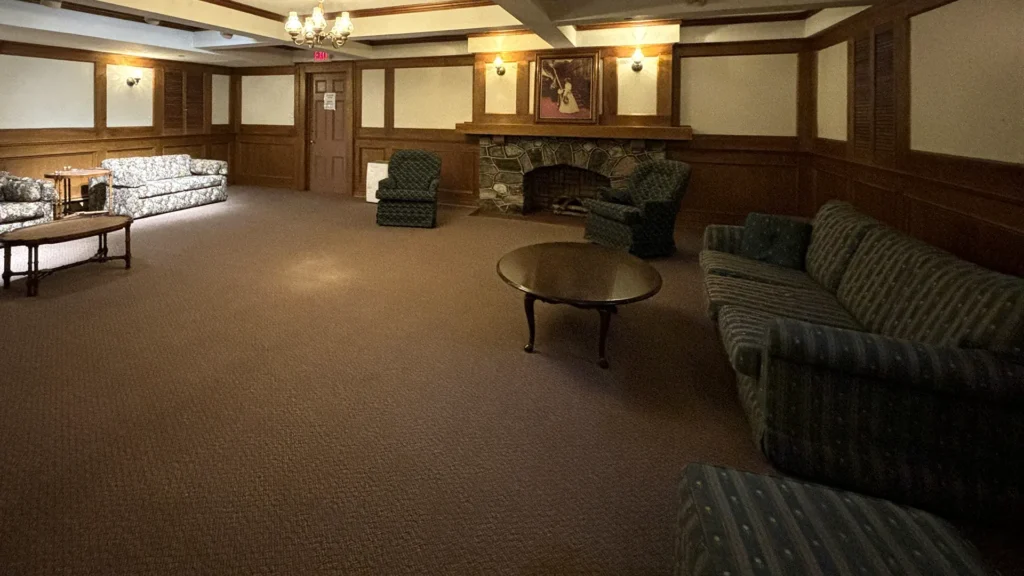
Carpet Experts Kingston provides basement carpet installation throughout Kingston, Ontario, with padding and materials matched to below-grade moisture conditions.
Request a Quote
Tell us about your project and we will get back to you within 24 hours.
Your information is secure and never shared.
What's Different About a Basement Install
Moisture Management
Below-grade spaces sit closer to soil moisture and can see higher humidity than upper floors. We check for damp spots and vapor movement before recommending carpet at all.
Concrete Slab vs. Subfloor
A bare concrete slab needs a different pad and sometimes a vapor barrier underneath, while a framed subfloor over sleepers behaves more like a main-floor install. We assess which one you have before quoting.
Pad Selection
Standard foam pad can soak up moisture from concrete, so for basements we typically recommend a moisture-resistant pad with a built-in moisture barrier that keeps slab moisture away from the carpet. The right pad and carpet combination also adds a layer of warmth underfoot, which matters in a Kingston basement through the winter months.
Stairwell Transitions
Basement stairs and the transition at the top landing often meet a different flooring type, so we plan transition strips and edge trim as part of the same job rather than an afterthought.
Our Process
Our Basement Installation Process
1
On-Site Assessment
We inspect the slab or subfloor, check for moisture and check that the space is ready for flooring.
2
Product and Pad Selection
Based on what we find, we recommend carpet and pad suited to a below-grade room, not just whatever is in stock.
3
Prep and Subfloor Work
We address any moisture concerns, level uneven spots, and prepare the slab or subfloor before carpet goes down.
4
Layout and Seam Planning
Before any carpet is cut, we plan seam placement and pattern direction for the room, including around support posts or mechanical rooms that basements often have.
Our Process
Finishing a Basement Installation
1
Installation
Our crew installs pad and carpet with attention to seams, transitions, and stairs if your basement includes them.
2
Power-Stretched Fit
The carpet is power-stretched into place rather than just tucked at the edges, so it stays tight against a concrete perimeter over time.
3
Trim and Transitions
Edges are trimmed clean and transition strips are set at doorways and the base of the stairs for a finished look.
4
Final Walkthrough
We walk the finished space with you to check seams, edges, and transitions before we consider the job done.
What's Included in a Basement Job
On-Site Moisture Check
We look at slab and wall conditions before recommending materials, not after.
Pad Matched to the Space
Below-grade pad choices differ from main-floor rooms, and we account for that in your quote.
Stairs and Transitions
Basement stairs and doorway transitions are measured and installed as part of the same job.
Written Quote
Workmanship details are set out in your written quote, job by job, so you know what to expect.
Basement Padding Chosen for a Below-Grade Room
Basements hold more ambient moisture than the rest of the house, even when a subfloor looks and feels dry. We factor that into padding selection for basement installs, since the wrong padding can trap moisture against the carpet backing and shorten the life of an otherwise good installation.
Protecting Your Basement Carpet After Installation
A good basement carpet installation is only half the equation. Below-grade humidity in Kingston homes shifts with the seasons, rising through spring thaw and humid summer stretches, so the habits you keep after the crew leaves matter almost as much as the materials underfoot. Running a dehumidifier during warmer months, keeping the space ventilated, and watching for condensation near exterior walls all help protect the carpet and pad you invested in. A musty smell or damp corner caught early is far easier to address than carpet that has already absorbed moisture over a season.
Basement carpet installation rarely happens in isolation. If your renovation includes drywall, framing, or new baseboards, we coordinate timing so carpet goes in once wall work is finished and dust has settled, and we plan transitions where basement carpet meets tile, laminate, or a mechanical room threshold. Getting that sequencing right avoids rework and keeps the finished space consistent room to room.
It can be, provided the space is dry and any moisture issues are addressed first. We assess your slab or subfloor before recommending carpet so you are not guessing.
Do basements need a different carpet pad?
Usually, yes. A moisture-resistant or waffle-style pad is common for basements sitting over concrete, since standard foam pad can hold moisture against a slab.
Can carpet go directly over a concrete slab?
In many cases yes, once the slab is checked for moisture and leveled where needed. Some basements benefit from a subfloor system first; we will tell you which approach fits your space.
How long does a basement carpet installation take?
Timelines depend on room size, stairs, and any prep work the slab needs. We give you a schedule as part of your written quote.
Planning a Basement Renovation?
Talk to us before you buy carpet for a below-grade room. We will look at your slab or subfloor and recommend materials suited to the space.
To provide the best experiences, we use technologies like cookies to store and/or access device information. Consenting to these technologies will allow us to process data such as browsing behavior or unique IDs on this site. Not consenting or withdrawing consent, may adversely affect certain features and functions.
Functional
Always active
The technical storage or access is strictly necessary for the legitimate purpose of enabling the use of a specific service explicitly requested by the subscriber or user, or for the sole purpose of carrying out the transmission of a communication over an electronic communications network.
Preferences
The technical storage or access is necessary for the legitimate purpose of storing preferences that are not requested by the subscriber or user.
Statistics
The technical storage or access that is used exclusively for statistical purposes.The technical storage or access that is used exclusively for anonymous statistical purposes. Without a subpoena, voluntary compliance on the part of your Internet Service Provider, or additional records from a third party, information stored or retrieved for this purpose alone cannot usually be used to identify you.
Marketing
The technical storage or access is required to create user profiles to send advertising, or to track the user on a website or across several websites for similar marketing purposes.