Stair Runner Installation Cost in Kingston: What You Can Expect to Pay
If you’re planning to put a carpet runner on your stairs in Kingston, the price can vary quite a bit depending on the runner, the number and shape of the stairs, the installation method, and how much preparation the staircase needs.
For a straight staircase in Kingston, expect about $40 to $60 per step for a basic runner supplied and installed with underpad. A typical 13-step staircase works out to roughly $520 to $780. With a mid-range designer runner, the same staircase usually lands around $1,000 to $1,250, and premium wool, landings or winders push it higher.
These are typical prices, not a fixed rate. The easiest way to avoid surprises is to compare quotes based on the same scope of work. One contractor might quote only for installation, while another may include the runner, padding, removal, and disposal.
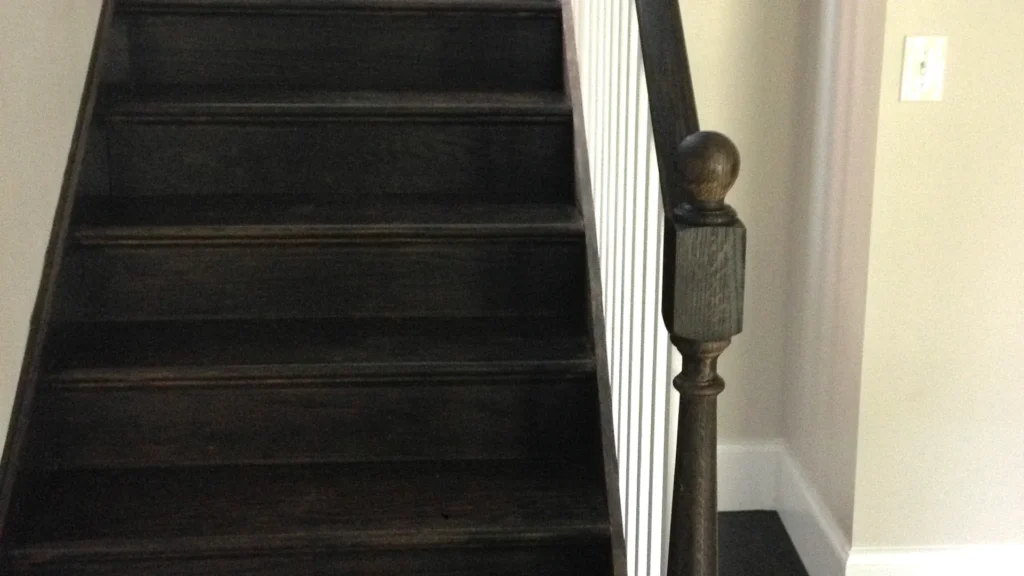
Typical Stair Runner Costs in Kingston
Here is what that looks like with the runner, underpad and installation included:
| Staircase | Typical installed price |
|---|---|
| 10 straight steps, basic runner | $400 to $600 |
| 12 straight steps, basic runner | $480 to $720 |
| 13 straight steps, basic runner | $520 to $780 |
| 14 straight steps, basic runner | $560 to $840 |
| 16 straight steps, basic runner | $640 to $960 |
| Typical flight, mid-range designer runner | $1,000 to $1,250 |
| Typical flight, premium wool runner | $1,400 and up |
| L-shaped or winder staircase | Installation alone can reach $1,000+ |
| Curved staircase | Needs an on-site measurement |
A staircase with landings, winders, curves, damaged wood, difficult access, or extensive removal will usually cost more than these straight-flight prices.
The final quote should also make clear whether the price includes the runner itself, underpad, removal of existing carpet, disposal, repairs, binding, tax, and any other extras.
What Are You Actually Paying For?
A stair-runner quote can contain several separate costs:
- The carpet runner
- Underpad or stair padding
- Installation labour
- Removal of existing carpet or runner
- Removal of old staples, tack strips, or other fasteners
- Disposal of old materials
- Binding or edge finishing, where required
- Preparation or minor repairs
- Installation around landings and winders
- Decorative stair rods, if you want them
- Applicable taxes
This is why two quotes for the same staircase can look very different.
A quote of $900 may not be comparable with another quote of $1,100 if the first covers installation only and the second includes the runner, padding, removal, and disposal.
Straight Staircases
A simple straight staircase is generally the easiest type to estimate.
Most of the difference between quotes on a straight staircase comes from the runner you choose. A basic runner keeps you near the low end of the table above, while a designer or wool runner moves you well past it.
Does the Runner Itself Cost Much?
It can. Quality runners typically sell for about $15 to $65 per linear foot. For a full flight, that is roughly $400 to $550 for a budget berber, $600 to $850 for a designer nylon herringbone, and $1,000 or more for premium wool, before installation.
The carpet runner is only one part of the project, but the material you choose can have a noticeable effect on the total price.
Factors that can affect material cost include:
- Fibre type
- Carpet quality
- Thickness
- Pattern
- Width
- Durability
- Availability
- Whether the material is sold as a dedicated runner or cut from broadloom carpet
- Whether the edges require binding or another finish
A relatively inexpensive runner can keep the material portion of the project down, while a premium wool or specialty runner can substantially increase the overall budget.
For that reason, a per-step installation figure should not automatically be interpreted as the total price of the runner and installation combined.
How Much Carpet Do the Stairs Need?
The amount of runner required depends on the dimensions of the staircase and the installation method.
For example, suppose each tread and riser together measure approximately 17.5 inches.
For 13 steps:
13 × 17.5 inches = 227.5 inches
That is approximately:
19 feet of runner
This is only a simplified example. The actual material requirement can be higher because of fitting, waste, the way the runner is positioned, landings, pattern matching, and the amount needed at the top and bottom.
The safest approach is to have the installer measure the staircase before purchasing a runner.
Buying material based only on the number of steps can result in too little material, particularly on stairs with unusual dimensions.
Waterfall vs. Wrapped Installation
There are several ways a runner can be installed on stairs.
Two common approaches are waterfall installation and wrapped or Hollywood-style installation.
With a waterfall installation, the runner generally flows from the tread down over the front of the riser before continuing to the next tread.
With a wrapped installation, the carpet is fitted more closely around the individual tread and riser, creating a neater, boxed look.
The appropriate method depends on the staircase, runner construction, desired appearance, and installer preference.
The installation method can also affect labour requirements, so it is worth asking the installer which method is included in the quote.
Stairs With Landings and Winders
A staircase with a landing or winding steps is more complicated than a straight flight.
Winder stairs change direction and may require additional cutting and fitting to keep the runner properly aligned.
A staircase with a landing may also require the runner to be joined, redirected, or otherwise fitted around the change in direction.
For these situations, a per-step price becomes less useful. Installation alone on stairs with landings or pie-shaped steps can reach $1,000 or more.
Ask for a site-specific quote rather than assuming that the straight-staircase rate applies unchanged.
Curved and Spiral Stairs
Curved and spiral staircases are even more difficult to estimate from the number of steps alone.
The installer may need to account for:
- Stair width
- Tread shape
- Radius or degree of curvature
- Runner width
- Pattern direction
- Seaming or joining
- Cutting and fitting requirements
- Attachment method
- Access to the staircase
For a curved or spiral staircase, an on-site measurement is usually more useful than a generic per-step estimate.
Removing Existing Carpet
If there is already carpet on the stairs, ask whether removal is included in the quote.
Removal can involve more than simply pulling up the carpet.
The installer may need to remove:
- Existing carpet
- Underpad
- Staples
- Tack strips
- Adhesive
- Other fasteners
There may also be a disposal charge.
If the existing carpet is being removed before a runner is installed, make sure the quote clearly states whether those services are included.
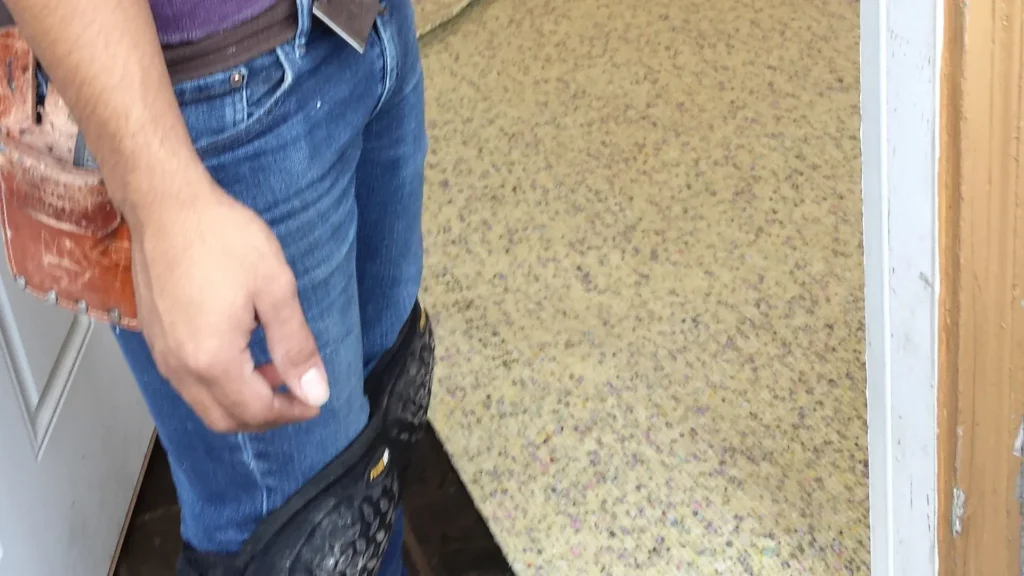
What Is Under the Existing Carpet?
Once the old carpet is removed, the condition of the staircase can become an important factor.
You may find:
- Painted wood
- Finished hardwood
- Plywood or another substrate
- Old adhesive
- Nail or staple holes
- Damaged tread edges
- Previous repair work
A runner can cover some cosmetic imperfections, but it does not eliminate the need for a structurally sound staircase.
If the existing treads or risers need significant repair, those repairs should normally be identified separately from the runner installation.
Repairs Are a Separate Issue
Minor preparation may be part of an installation quote, but significant repairs can change the project considerably.
For example, a staircase may require attention if:
- A tread is loose
- A riser is damaged
- The substrate is uneven
- The tread edge is broken
- Old fasteners have caused significant damage
- The staircase requires structural work
Ask the installer to identify repair work separately whenever possible.
That makes it easier to understand how much you’re paying for the runner project itself and how much is being spent on preparing the staircase.
What Can Make the Project More Expensive?
Several factors can push the final price above a basic straight-staircase estimate.
1. More complicated stairs
Winders, landings, curves, and unusual stair dimensions require more measuring and fitting.
2. Premium runner materials
Higher-end carpet can increase the material cost substantially.
3. Existing carpet removal
Removing carpet, padding, staples, tack strips, and debris takes additional labour.
4. Stair repairs
Damaged or uneven stairs may require preparation before the runner can be installed.
5. Custom finishing
Binding, unusual edge treatment, pattern matching, or other custom work can add to the project.
6. Difficult access
A difficult-to-access staircase can take longer to prepare and install.
7. Decorative hardware
Stair rods and other decorative details add to the material and installation cost.
What Should Be Included in the Quote?
Before accepting a quote, ask the installer to specify what is included.
A useful quote should identify, where applicable:
| Item | Included? |
|---|---|
| Runner material | Yes / No |
| Underpad | Yes / No |
| Installation labour | Yes / No |
| Existing carpet removal | Yes / No |
| Old padding removal | Yes / No |
| Staple/tack-strip removal | Yes / No |
| Disposal | Yes / No |
| Binding or edge finishing | Yes / No |
| Minor preparation | Yes / No |
| Repairs | Yes / No |
| Landings/winders | Yes / No |
| Stair rods | Yes / No |
| Tax | Yes / No |
This is more useful than comparing the headline price alone.
Example: A 13-Step Staircase
Suppose you have a straightforward 13-step staircase with no landing, no major repairs, and a standard runner installation.
With a basic runner supplied and installed at $40 to $60 per step:
13 × $40 to $60 = $520 to $780
With a mid-range designer runner ($600 to $850) plus installation from about $400:
Roughly $1,000 to $1,250
That is a realistic starting budget for comparing quotes.
However, the actual quote could be different if the project includes:
- A premium runner
- New underpad
- Removal of existing carpet
- Disposal
- Repairs
- Custom installation
- Pattern matching
- Stair rods
- Other unusual preparation
The important point is to compare the scope of work, not just the final dollar amount.
Is a Stair Runner Cheaper Than Full Stair Carpeting?
Not necessarily in every situation.
A runner covers only the central portion of each stair, so it uses less carpet than fully carpeting the entire staircase.
However, the installation still involves detailed work around individual treads and risers. The cost therefore depends on the runner material, labour, staircase design, and preparation required.
If you’re comparing a runner with full stair carpeting, ask for both quotes using the same scope of work.
That gives you a more meaningful comparison than comparing the material coverage alone.
Can You Supply Your Own Runner?
Sometimes.
If you already have a runner you want to use, ask the installer whether they accept customer-supplied material.
Before buying it, confirm:
- The runner is wide enough
- There is enough length
- The construction is suitable for stairs
- The backing is appropriate
- The edges can be finished as required
- The pattern will work with the installation method
- There is enough extra material to account for waste
It is worth confirming these details before ordering the carpet because a runner that looks suitable online may not be appropriate for the staircase or installation method.
Are Stair Rods Necessary?
No. Stair rods are primarily decorative.
A properly installed stair runner should be secured using an appropriate installation method rather than relying on decorative rods alone.
If you want stair rods for appearance, ask whether they are included in the installation quote or priced separately.
How Long Does Stair Runner Installation Take?
Installation time depends on the staircase and the amount of preparation required.
A simple straight staircase may be relatively straightforward, while a staircase with winders, landings, curves, old carpet, or repairs can take longer.
Rather than relying on a generic installation time, ask the installer how long they expect your particular staircase to take.
Also ask whether the staircase can be used immediately after installation or whether any adhesive, finishing material, or other preparation requires additional time.
Questions to Ask a Kingston Installer
Before agreeing to the work, consider asking:
- Is the runner included in the quoted price?
- Is the underpad included?
- Does the quote include removal of my existing carpet?
- Is disposal included?
- Will you remove staples and tack strips?
- Are minor repairs included?
- What installation method will you use?
- Does the price change for winders or landings?
- Is binding included if required?
- Are stair rods included?
- Is tax included in the quoted price?
- Can I supply my own runner?
- How long should the installation take?
- Can I use the stairs immediately afterward?
- Will you inspect and measure the staircase before giving the final price?
These questions make it much easier to compare quotes on an apples-to-apples basis.
What to Send for a Preliminary Estimate
If an installer offers preliminary estimates based on photos, provide enough information to make the estimate useful.
Helpful information includes:
- Number of stairs
- Photos showing the entire staircase
- Close-up photos of the treads and risers
- Stair width
- Whether there is a landing
- Whether there are winders
- Whether the staircase is curved
- Photos of the existing carpet
- Whether you want the existing carpet removed
- Whether you already have a runner
- Your preferred runner style or material
A photo can help an installer understand the general project, but an on-site measurement may still be necessary before a final price is confirmed.
Frequently Asked Questions
How much does it cost to install a stair runner in Kingston?
Expect about $40 to $60 per step for a basic runner supplied and installed with underpad. A typical straight flight with a mid-range designer runner runs around $1,000 to $1,250. Wool runners, landings and winders cost more.
How much would 13 steps cost?
About $520 to $780 with a basic runner, or roughly $1,000 to $1,250 with a mid-range designer runner, before removal, repairs, or other extras.
Do per-step prices include the runner?
Not always. Some installers quote per step with the runner and underpad included, while others quote labour only. The quote should specify whether the runner, underpad, removal, disposal, repairs, and other items are included.
Is removing old carpet included?
It may or may not be. Ask specifically whether the quote includes carpet removal, padding, staples, tack strips, and disposal.
Can a stair runner be installed over existing carpet?
That depends on the existing carpet, its condition, the installation method, and the installer. In many cases, the existing material is removed so the staircase can be properly prepared.
Do I need new underpad?
Not necessarily, but the appropriate underpad can affect comfort, appearance, durability, and installation. Ask the installer what type of pad they recommend for your runner and staircase.
Are curved stairs more expensive?
They can be. Curved stairs require more detailed measuring and fitting, so a simple per-step estimate is less reliable.
Do I need stair rods?
No. They are generally decorative rather than the primary method of securing the runner.
Should I get more than one quote?
If the project is significant or the scope is complicated, comparing multiple quotes can help you understand what is included and whether contractors are pricing the same work.
Bottom Line
For a straight staircase in Kingston, budget about $40 to $60 per step for a basic runner supplied and installed with underpad.
For a 13-step staircase, that is roughly $520 to $780, or around $1,000 to $1,250 with a mid-range designer runner.
The final price can be higher or lower depending on the runner, padding, installation method, removal, disposal, staircase design, repairs, and other project-specific requirements.
The most useful way to compare quotes is therefore not to ask only, “How much per step?”
Ask instead:
“Exactly what is included in the price?”
That distinction can make a major difference when comparing stair-runner quotes.